The UK Connection
Ancestry
Let's go way back, way back in time.
My father's ancestry is proudly English, with rumours of a royal connection in our heritage.
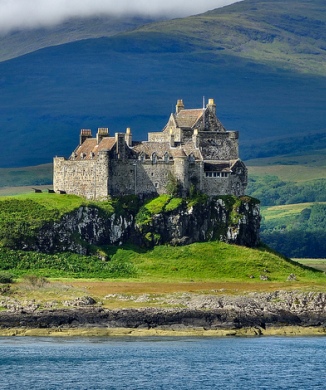
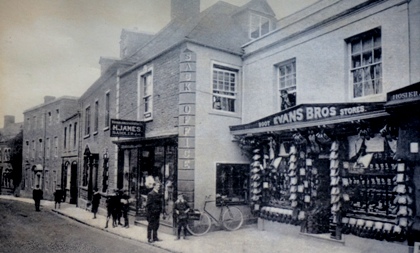
My father's father was a teacher (which my father would become), and my father's grandfather was a saddler. My father lived by the sea in Exeter and used to spend his weekends sailing. He was a keen long distance runner and would jog for fun. At college he took up drums and used to play in dance bands (brushes on snare sort of stuff). My father was also a keen amateur actor, acting in comedy and drama productions, and sang tenor and bass in church choirs all his life. While I'm not keen on sailing and for me the words 'jog' and 'fun' don't go together, the drums bit got passed on, with both my daughter and me playing drums.
My father decided to be a teacher as it was a 'safe' profession. Under different circumstances he would have rather been a scientific researcher. One of his friends worked on a hush-hush project in the war which he wasn't allowed to talk about, but my dad suspected it was related to cracking the code for the German U-boat communications. However, teaching was a more secure occupation. My Dad's tendency to avoid risk was possibly passed on from his father, and has been passed on to me.
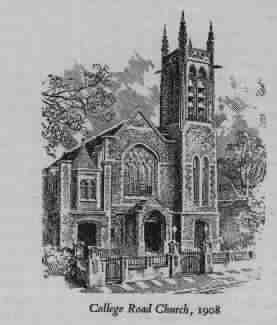
My mother's father got called by God like his own father, and became a street preacher, evangelising on street corners and caring for down and outs in Scotland and Ireland. In the first world war he was a chaplain, and was caught in a gas attack by the Germans, which would damage his nasal passages for the remainder of his life. He was also shot, but his pocket bible took most of the impact of the bullet. Later in his life he would be in charge of a large Baptist Church in a suburb of London. Although my mother wasn't exceptionally musical, my mother's sister was a concert pianist, playing recitals with orchestras etc. When she got married she gave this up (as you did back then.)
My Mum and Dad met in my grandfather's church. They both taught Sunday school. During the London blitz my Dad was on fire spotting duty at night. He was also studying for a degree at night, but couldn't continue because when the bombers came over you had to turn all your lights off.
During the blitz my Mum slept with her sister (and the occasional rodent) under a heavy wooden table in the basement, as this was the safest place to be when the bombs started falling. Later, as she was a teacher, she was sent to Wales along with 40 children, away from the bombing of London and away from the childrens' families - quite daunting for a girl fresh out of college. Classes were conducted in large pipes buried under the ground. As teachers were an essential service, Mum and Dad weren't conscripted into the army.
London life
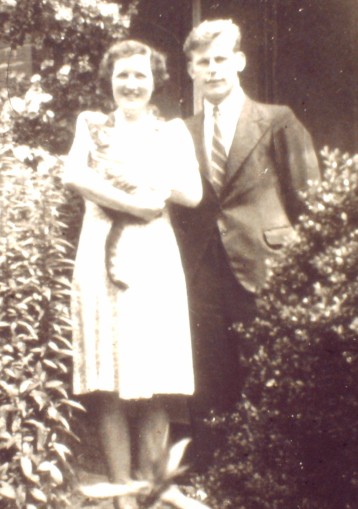
My Dad asked my Mum to marry him, but ever practical, she said not until they had somewhere to live. At the end of the war, the opportunity to house-sit a large house came up. The owners had moved to the country during the war and were not yet ready to return to London. Although the furniture in the other rooms was covered in sheets, Mum and Dad were allowed to use two rooms.
My Mum and Dad were married by my grandfather, and settled down to married life with their cat 'Fluffy'.
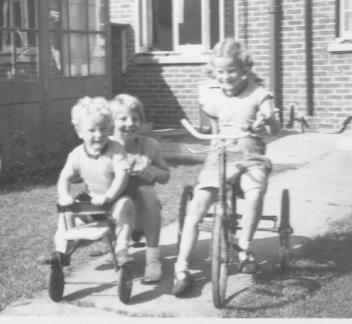
I am the third child of my parents, with two older sisters. I was born in Harrow in London. I was born three weeks before schedule, possibly due to the fact that my mother was scrubbing the floors of the house they had just bought and were intending to move into before I was born. After an unsatisfactory experience with her first childbirth in hospital, and upset because my father was not allowed to be present, my mother resolved to have her other children at home. Whilst her second child arrived before the midwife (who was still cycling through the snow to get to our place), I arrived with midwife present around 4am after a short labour. My mother, who never admitted that she was sick or had pain and who soldiered on under all circumstances, told me that she would have been ashamed if she had yelled or moaned in pain during childbirth.
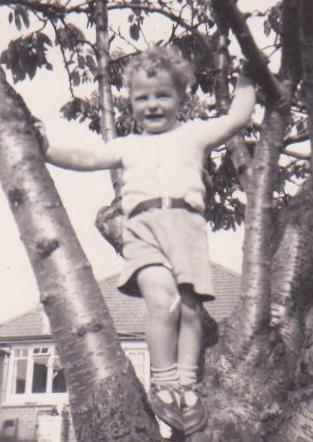
Back in the days before coal was banned in London, they experienced terrible fogs in winter with the air thick with soot. My father told me stories of walking home in the evening, with the light from his torch barely able to reach the kerb at his feet. He had to walk home by following the contour of the kerb, because he couldn't see anything. Once home, blowing his nose would result in filling his handkerchief with black soot. My sisters had both had whooping cough (requiring the traditional 'hold them upside down and slap their backs' treatment). London was not a good place for children with respiratory complaints, so Mum and Dad decided to move somewhere healthier.
£10 Poms
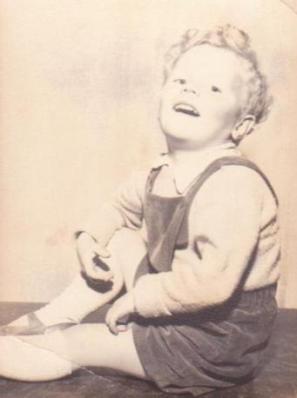
My family moved from London to a little fishing village on the south coast of England, called Littlehampton. However this only lasted a few years. The desire for a better standard of living for themselves and for their children prompted them to emigrate. Canada was high on the list, and Perth was also, but eventually they chose Sydney. Dad paid the £10, and they loaded some of their belongings onto an aging Italian 'cruise ship' called the Fairsea. World War II had broken out while she was being built, so during the war a short runway was built on her deck and she was used as an aircraft carrier by the US and the UK. For a while after the war she was used as a troop carrier. She was sold to the Sitmar line in 1949, and was converted to an austere migrant ship with accommodation for 1800 emigrants. I was three when it was my turn to enjoy her charms.
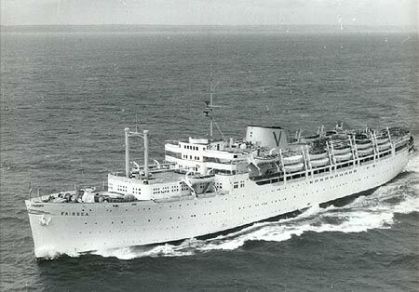
The trip was a trial. On the first day out of Southhampton the ship passed through the Bay of Biscay, notorious for its swells, and most passengers lost their appetite, if not their lunch. I got seasick of course. Most people soon found their sea legs. In the Indian ocean the children would use the ships deck as a slippery dip, sliding first one way and then the next, as the ship lurched in the swell. A small ship can be a petrie dish for infectious diseases, and ours was no exception. Not far into the journey I developed what was suspected to be both chicken pox and mumps, and spent some days along with other children in quarantine in the ship's hospital. I was also a fussy eater so I ate very little of the greasy and unfamiliar Italian food. By the end of the voyage I had to be carried as I was too weak to walk.
Bradfield
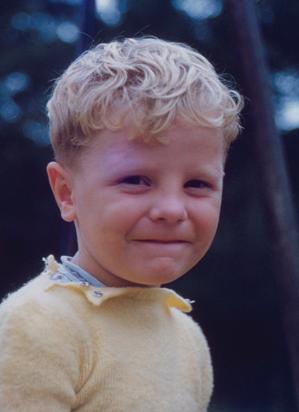
Having arrived in Sydney, the family was housed in Bradfield Park Migrant Hostel (East Lindfield) in a section of a Nissen hut, a basic shelter made with corrugated iron in a half cylinder shape. The huts had previously been used as army barracks. We were 'lucky' to live together (five of us in two rooms with four single beds). Families with older children were sometimes split up and housed in the other part of the camp, in segregated male and female dormitories.
Mum often cried herself to sleep. This wasn't the life the brochures had promised. The walls were paper thin and didn't seal where the corrugations were. I was told that the lady next door slept with a knife under her pillow, as she didn't want her husband to cause her to have any more children.
Orchard House
Eventually the house in England was sold, and the money came through. Whilst it wasn't a fortune, anything was better than the migrant camp. Mum and Dad bought a little two bedroom fibro orchard house at the end of Kissing Point Road in Turramurra. The orchard was no longer a going concern, and would eventually be the site for Turramurra High school. There was no road to the house in those days, and my sisters kept their gumboots in a box at the top of the orchard. The school bus would drop them off where the road ended, and they would change out of their school shoes and clomp through the mud and cow pats in the orchard to get home. Dad cycled to work in Gordon, while Mum was initially at home with me.
The summer of 1959/1960 was considered by the locals to be unusually hot. For new arrivals from colder climates it must have been a shock. I can remember going with Mum and Dad into town to buy their first electric fan. It had a 20cm propellor, and a wire guard with holes big enough to stick several fingers through. You can see this little blue fan being used to cool the valves in my amplifier in one of the Farm Summer Tours photos in Chapter 3. I was also told stories of how my father and sisters fought the fires in the Turramurra valley that first year, and in subsequent years. Other memories include my mother trapped in our house with a cranky cow preventing her from venturing outside, my sisters' boy friends riding their horses, loading slugs into their their air rifles and shooting at things, being kicked in the chest by a horse because I was hitting its rump with a stalk of long grass, and my sisters roller skating on the newly laid wooden floors of new houses before the walls were erected.
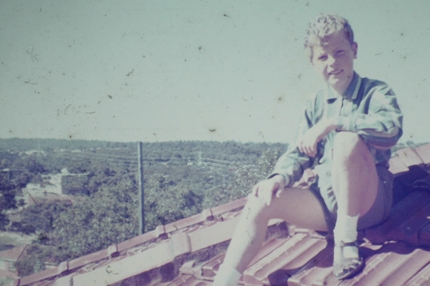
At first there weren't many people around, and so we made friends with whoever we could. When I was sick I was minded by a large kind hearted lady who lived in a stone house not quite completed, and who had thicker facial stubble than I now have. I played with the children of one of her relatives, who were even poorer, and lived even further in the bush. It is from these children that I picked up my first swear words, returning home one evening with wheels for a billy cart, and saying to my mother as pleased as punch "Look at these bloody wheels". To my parent's credit I was not punished, but was advised that this was a word not used in polite society.
Life was all about routine. On Sundays we always went to church. Initially we would be given lifts by neighbours and go to local churches. I can recall travelling in the back of an old Holden with black leather upholstery and a big chrome bar across the back of the front seat, so the kids in the back could hold on, as there were no seat belts back then. Goodness knows how many young teeth and noses that bar would have rearranged in the event of an accident. In time Mum and Dad settled on Turramurra Methodist church, which would be a big part of Dad's life for the rest of his life. After church while lunch was being prepared I used to love watching The Samurai on our black and white television. Sunday lunch was always a lamb roast, (although chicken would replace the lamb in later years, and the Samurai in black and white would be displaced by Variety Italian Style in colour). Monday nights would always be shepherds pie, made with the minced leftovers of the roast. I remember Mum's big cast iron metal mincer, and have seen some just like it for high prices in antique shops. For a while, Friday night was takeaway night. We would get in the Morris Minor, and buy fish and chips from Turramurra shops, followed by sharing a block of Cadbury's Energy chocolate (darker than milk but not as bitter as dark). The rest of the meals in the week were also fairly routine, depending on what the latest fashion for healthy eating was at the time. One night in the week I can recall not looking forward to was lambs fry night. The little blood vessels running through the liver used to put me off. At least we were't made to eat crumbed brains like my wife had experienced when she was young.
Our internal and external exercise was also part of the routine. Mum was a kindergarten teacher who was used to organising the day for her students, and this behaviour continued through to our family life. She was keen for us to be 'regular'. As far as I remember I was lucky enough to be able to keep her happy on that count. Not everyone in the family was that fortunate. I can recall also on holidays having our exercise organised for us. We would be relaxed and happy and Mum would announce "Time for some fresh air - Come on, we're off to Ettalong" and we would be off walking for the next hour whether we wanted to or not. Saying no to Mum didn't seem to make any difference, we ended up doing what she wanted to do anyway.